Showing posts with label poetry. Show all posts

Tuesday, 28 April 2015

Interviewing Sylvia Plath


Objectives:
- to use role play to consider authorial intent
- to compare two Plath poems: "Daddy" and "Mushrooms" 

Pre-Assessment: 
1. A lot of Plath criticism tends to focus on her untimely death, and how her poetry does or does not foreshadow that. I think of "Mushrooms" as a great example of how her poetry defines her humanity; she is more than just her death. Having read "Daddy" last class, and "Mushrooms" at the beginning of this class, what strikes you as the largest differences between them?
2. How do you think Plath perceived these poems as a reflection of herself?
3. As a literary critic, how do you see these poems reflecting her?

Instructions:
1. Assign everyone in pairs. 
2. Decide which poem you will be discussing. 
3. Decide which one will be the interviewer, and which will be Plath.
4. Interviewer: take 15-20 minutes to brainstorm questions; remember, you are trying to determine why Plath made particular choices in her writing. 
     a. Word choices?
     b. Images?
     c. Rhythm and metre?
     d. (etc)
5. Plath role-player: take 15-20 minutes to re-read the poem several times, and consider what it would be like to write the poem.
6. Spend 5-10 minutes exchanging questions and answers.
7. Swap roles. 

Post Assessment:

What was it like to think like Sylvia Plath? 
How is thinking like the author different from thinking like a critic?

***********

Summary: 

I've been thinking about using more role-playing activities in my classes lately, because of the way that these activities can draw out more kinesthetic learners; they learn by doing, so in acting the role of critic (say, as an interviewer), they are more likely to get a feel for how to be a critic. The other advantage of role-playing is that it mixes things up: class isn't just group work and lecture (or some combination thereof), but there are also different activities to keep things interesting.

Tuesday, 25 November 2014

Brain Map Autobiography (Creative Writing Seeds)

Brain Map

What do you think makes you who you are?
What are the words, thoughts, beliefs, and ideas that make up you?
In this writing exercise, use the “brain map” to the right to help you figure out what’s in your brain! Then, use those words to form a poem that tells us about you.

1.       Fill out this brain with words, thoughts, and ideas that make up the person that you are!


2.       Use the words that filled out your “brain,” and explain what they mean to you to make a poem.

For example, your poem might look like this:
Ex:
Elyn’s Mind
Family – Family is at the forefront of my thoughts, and so it is literally at the front of my brain.
Reading – I am always thinking about reading: what I have read, what I am reading, and what I want to read next.
Painting – I like art; I used to do a lot of drawing, but now when I do art, I find that I am mostly drawn to painting.
Brown – I love the colour brown! Many of my clothes are brown, my furniture is brown, and even my bedroom is brown. I love the warmth of the colour; I feel that I sink into it and it envelops me.
Roxette – Roxette is my favourite band. They are a band from the 80s that no one knows, but I hear their music and I feel perfect.


Now, you try! Use the words that filled up your brain to write an informally structured poem about who you are, what you do, and what you like.


Thursday, 15 May 2014

Beowulf Translation Debate

The idea for comparing translations of Beowulf as a class exercise in close reading is not mine, but a fellow graduate student's. However, I did modify this exercise to make the group work a bit more dynamic; the students were then required to debate the merits of their translation.
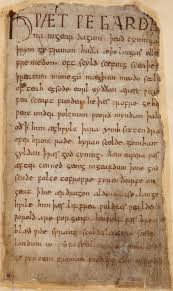


What makes a better translation?
What makes better literature?
How do you challenge someone else's opinion on literature using an identifiable set of criteria?
How do you develop this set of criteria?

I was evaluated based on this class, and it went really well.

The other important thing to note is that you should give them this hand out in advance. When I did this set of debates, I gave them a day to prepare. When I later gave them a week to prepare, the results were much better. 

********************************************************************************
Tomorrow in class we will be discussing various translations of the same passage from Beowulf. Please read the translations, and then use the following questions to help draw comparisons between them.

  1. How does the form of this translation make use of oral poetic characteristics? (alliteration, repetition, spacing, etc) [NB: I have recreated the text exactly as it appears on the page, including commas, spaces, justifications. Take that into consideration, also!]
  2. What kind of imagery is used in the passage?
  3. What word choices does the translator make?
  4. What can you infer about the translator's intent based on the language? (academic, storytelling, etc) What are the benefits of the intent that the translator uses?
  5. Does the passage reflect the model of the heroic mode? How?

Translation #1 (Seamus Heaney):

So times were pleasant for the people there
100 until finally one, a fiend out of hell,
began to work his evil in the world.
Grendel was the name of this grim demon
haunting the marches, marauding round the heath
and the desolate fens; he had dwelt for a time
in misery among the banished monsters,
Cain’s clan, whom the Creator had outlawed
and condemned as outcasts. For the killing of Abel
the Eternal Lord had exacted a price:
Cain got no good from committing that murder
110 because the Almighty made him anathema
and out of the curse of his exile there sprang
ogres and elves and evil phantoms
and the giants too who strove with God
time and again until He gave them their reward.

(2001-02-17). Beowulf (Bilingual Edition) (Kindle Locations 476-477). W. W. Norton & Company. Kindle Edition. 


Translation #2: Anne Schotter:

And so the warriors lived in joy
100 happily until one began
to commit crimes, a fiend from hell
the grim demon was called Grendel,
notorious borderland-prowler who dwelt in the moors
fen and stronghold; the home of monsterkind
105 this cursed creature occupied for a long while
since the Creator had condemned him
as the kin of Cain - he punished the killing,
the Eternal Lord, because he slew Abel;
He did not rejoice in that evil deed, but He banished him far
100 from mankind, God, in return for the crime.

(Excerpt from Longman Anthology of British Literature, 3rd Edition. Eds. Damrosch and Dettmar.)


Translation #3: Allan Sullivan and Timothy Murphy


So the king's thanes
90 gathered in gladness; then crime came calling.
a horror from hell, hideous Grendel,
wrathful rover of borders and moors,
holder of hollows, haunter of fens.
He had lived long in the land of the loathsome,
born to the band whom God had banished
as kindred of Cain, thereby requiting
the slayer of Abel. Many such sprang
from the first murderer: monsters and misfits,
elves and ill-spirits, also those giants
100 whose wars with the Lord earned them exile.

(Excerpt from Longman Anthology of British Literature, 3rd Edition. Eds. Damrosch and Dettmar.)


Translation #4: R.M. Liuzza [the text assigned to this course]

-Thus this lordly people lived in joy,
blessedly, until one began
to work his foul crimes – a fiend from hell.
This grim spirit was called Grendel,
mighty stalker of the marshes, who held
the moors and fens; thivs miserable man
lived for a time in the land of giants,
after the Creator had condemned him
among Cain's race – when he killed Abel
the eternal Lord avenged that death.
No joy in that feud – the Maker forced him
far from mankind for his foul crime.
From thence arose all misbegotten things,
trolls and elves and the living dead,
and also the gianys who strove against God
for a long while – He gave them their reward for that.

[Anonymous. Beowulf. Ed. R.M. Liuzza. Peterborough: Broadview, 2013. Print.]

Friday, 2 May 2014

Creative Writing Prompt: ee cummings and Gibberish Poetry

* This creative writing class was inspired by my English 110 class: I was teaching this poem to them, and one of my students wrote an essay about how the language cummings' uses shows his frustration. I had recently been reading about how we don't think of teaching our young writers about sad or angry topics - maybe because it makes us uncomfortable? - but they are no less capable of feeling such feelings. They can also write about these feelings, too. This is an attempt at making that writing feel constructive for them, given the stigma surrounding expressing anger or sadness, especially in children's writing. Young writers are able to engage with the concept really easily; they really get issues in the environment, so it leads to some interesting discussion on topics related to that. (Notably, the word "hell" in the last line is omitted due to the age of the participants)

Slide 1:

Gibberish Poetry

Slide 2:

'pity this busy monster, manunkind'

pity this busy monster, manunkind,

not. Progress is a comfortable disease:
your victim (death and life safely beyond)

plays with the bigness of his littleness
--- electrons deify one razorblade
into a mountainrange; lenses extend
unwish through curving wherewhen till unwish
returns on its unself.
                          A world of made
is not a world of born --- pity poor flesh

and trees, poor stars and stones, but never this
fine specimen of hypermagical

ultraomnipotence. We doctors know

a hopeless case if --- listen: there's a ...
... good universe next door; let's go

E. E. Cummings

Slide 3:

The language that this author uses to express his frustration shows us how we can play with words to express our feelings. He uses sarcasm (ie “not”), he makes up words (“manunkind”, “hypermagial”, “unwish”, “wherewhen”), and he interrupts his own thought process (“listen-- there's...”), to show how upset he is.

Slide 4:

What is he upset by?

Slide 5:

*show poem again so they can re-read, looking for their answers*

Slide 6:

- people (he changes the word “mankind” to be man”un”kind, suggesting that people are not very nice. He may even be referring the them as monsters.
- progress (he says progress is a comfortable disease)
- things (“a world of [things that are] made is not a world of [things that are] born,” meaning that he thinks “stuff” is bad for the world, like: TVs, computers, etc)

Slide 7:

It seems that he is upset with how people are paying too much attention to their stuff rather than the world around them. He also seems to be angry about how people ignore nature while trying to find answers.

He suggests that when the planet has stopped working, there is somewhere else to go when he says: “We doctors know / a hopeless case if --- / listen: there's a .../ good universe next door; let's go.” He is saying there might be another place to go, and it's funny because he interrupts himself with the symbols: ---

Slide 8:

What sorts of things make you upset or sad or frustrated?
*give them time to answer questions*

Slide 9:

What sorts of things make you upset or sad or frustrated?

- when your homework is hard
- arguments with friends or family
- when something you own breaks or is lost
- when it's too cold outside to play
*give them time to answer questions*

Slide 10: 

Try writing a poem about something that frustrates you. You can use the same language that ee cummings uses, like nonsense words, to express how sad it makes you.

For example, if I was writing a poem about how living with my sister can be frustrating, I might say “When she doesn't do the dishes, I want to floop and moop down the loop!”

Even though the words aren't real, your audience will understand that you are frustrated, but when you make your sad feelings sound funny, it helps you feel better. Plus, it will also help you feel better to communicate that frustration!


Book Spine Poetry - Inspiration for Young Writers


This one is definitely my favourite. "Follow me." I snerk every time.


Wednesday, 30 April 2014


English Literature: The Venn Diagram
I love Tolkien's status. (But the logical fallacy is that since Shakespeare occupies all spaces, it suggests that he and Tolkien are equally present in all things).


"Blues" in Braille


"Blues" by ee cummings
(in braille!)

The Sonnet Chart: the best way to teach sonnets, ever

Three Types of Sonnets


Petrarchan (Italian)
Shakespearean (English)
Spenserian (English)

14 lines
Iambic pentameter
14 lines
Iambic pentameter
14 lines
Iambic pentameter
Octave/Sestet
Yes
No
No
Quatrain/Couplet
No
Yes
Yes
Content
* Octave presents a narrative, states a proposition, or raises a question;
* The sestet drives home the narrative by applying the proposition, or solving the problem.
* Usually about a woman.
*Theme of love as transcendant. Highly exaggerated.


* Shakespeare sometimes used the sonnet form to satirize the hyperbolic nature of the Petrarchan sonnet, ie Sonnet 130
* By far the most prolific and successful writer of English sonnets, the English sonnet form is therefore named after him

* Spenser complicates the Shakespearean form by extending the number of rhymed endings.
* The couplet in the English sonnet form often concludes the topic of the sonnet
* Spenser wrote series of sonnets on a single topic: ie  Amoretti and Epithalamion

Rhyme Scheme
abbaabba + (cdecde)
or (cdcdcd)
or (cdedce)

abab cdcd efef gg

abab bcbc cdcd ee


·         Keep in mind that some sonnets may have aspects of one or more kinds of sonnets

·         Think about how the format changes the meaning of the poem, especially when you can compare one sonnet to another.